
LONDON & SURROUNDING AREAS
Packing and boxes delivery for a better prepared London move
Packing is where a move begins to take shape. The right materials, manageable boxes and a clear labelling system make belongings easier to identify and handle. BestMove offers packing and boxes delivery in London. Discuss what you are moving, the materials needed and any packing assistance you want to arrange, then confirm quantities, timing and the agreed work before you start.

YOUR MOVE
Packing support
YOUR BELONGINGS
Boxes & materials
YOUR ARRANGEMENTS
Fragile belongings
THE SERVICE
Choose materials around the contents
Look at what you need to pack before deciding on a box order. Books, kitchenware, bedding and framed pictures call for different choices. A large box is not always the useful box: dense contents can quickly become too heavy to handle comfortably. Think about how boxes will close, stack and travel, as well as how many objects fit inside. Make a rough room-by-room list and explain fragile or unusually shaped belongings when enquiring. If the materials form part of a larger move, discuss them alongside home removals so the packing plan and the transport inventory describe the same load.
Distinguish material delivery from packing labour
Receiving boxes and having somebody pack your belongings are different arrangements. Say which you need, which rooms are involved and whether you intend to pack some contents yourself. Confirm the amount of labour and the materials separately, including when each is required. Ask what you should have sorted or set aside before any packing assistance begins. Avoid assuming an hourly transport quote includes packing time, boxes or protective wrapping. If you are preparing a limited load, explore man and van services and explain how ready the items will be at collection. The useful booking is the one that reflects your actual division of the work.
THE DETAILS
Make fragile contents easier to protect
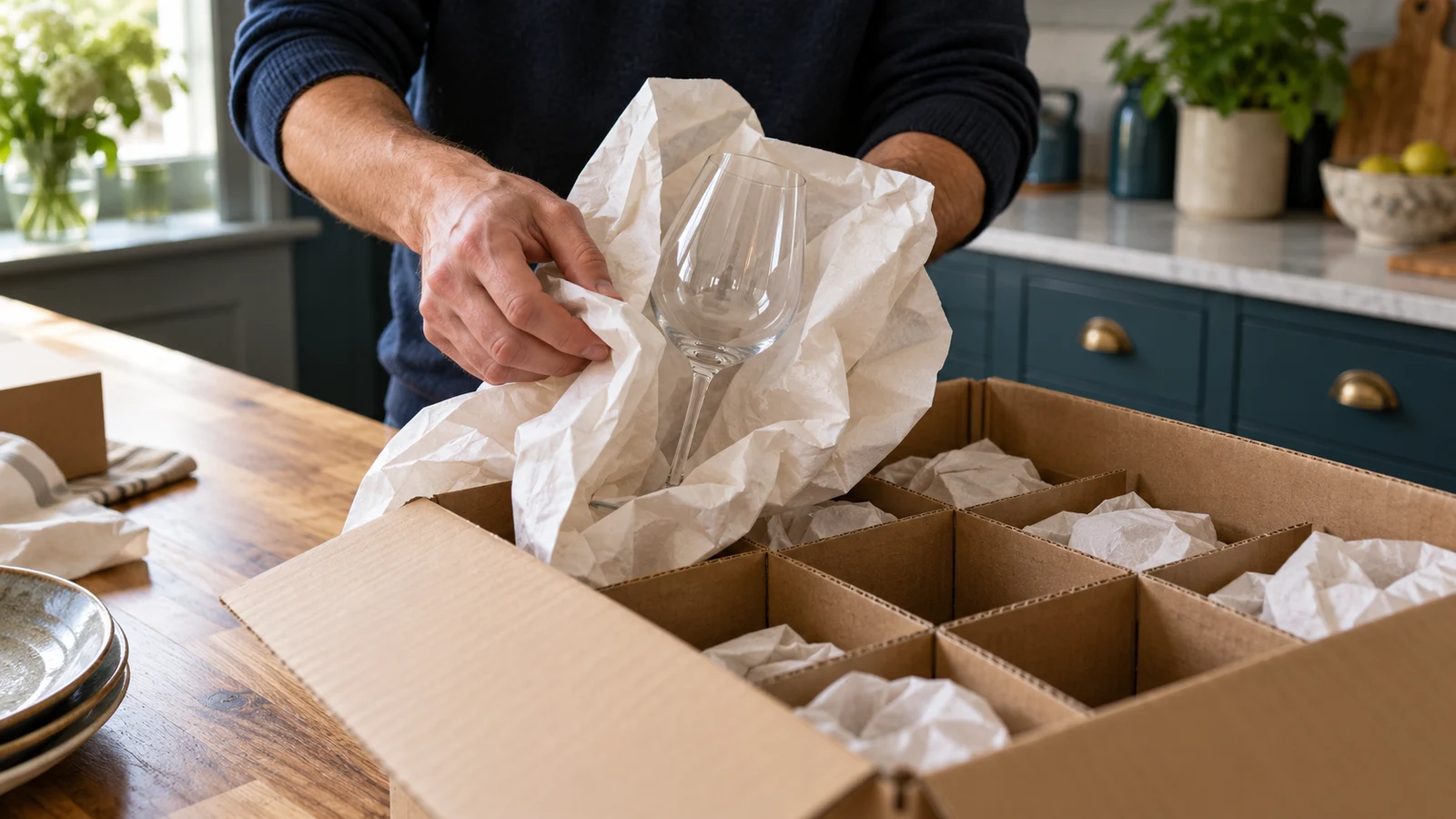
Wrap breakable objects individually and avoid leaving empty spaces that allow them to move against one another. Use appropriate cushioning and keep fragile items away from heavy objects that could bear down on them. The box should protect its contents, not merely contain them. Check that the bottom is secure, close the top properly and mark the box clearly without assuming a label alone will prevent damage. Describe valuable, delicate or unusual objects before choosing packaging, and ask whether any specialist handling falls outside the agreed service. For larger pieces that do not belong in standard boxes, discuss the preparation needed for furniture delivery or a wider move.
Pack books, kitchenware and everyday possessions differently
Place heavy contents in smaller boxes and keep the weight balanced rather than concentrating it at one end. Sort kitchen cupboards before packing: open liquids, food and cleaning products need careful decisions about what is suitable to transport. Keep lids secure and tell the team about anything that may require special preparation or may not be accepted. Do not mix fragile pieces with loose heavy objects. Bedding and lighter household goods can help fill suitable boxes, but avoid hiding breakables without labelling them. Make a short contents list as you go. Our moving advice offers further prompts for sorting and preparation without replacing advice on your specific items.
MOVING DAY
Use labels that work at the new address
Choose destination room names before packing starts and use them consistently. A label reading ‘front bedroom’ is useful only if everybody knows which room that means. Add a short contents description or box reference, and keep a separate list for anything you need to find quickly. Label for unloading as well as packing, including more than one visible side where practical. Avoid writing sensitive or valuable contents in unnecessary detail on the outside. For a workplace, use department names and the same room references shown on the destination plan. Our office removals page explains how consistent labels connect packing to the layout of a new working space.
Prepare furniture parts without losing the details
If shelves, doors or legs need removing, check the furniture instructions and agree who will do the work. Keep small fittings in labelled bags associated with the correct piece, and photograph the assembly where useful. Protect detached parts as carefully as the main item; a loose shelf or glass panel can be overlooked among other belongings. Do not tape directly to delicate finishes without checking the effect of the adhesive. Explain furniture requiring dismantling or reassembly before the move and discuss our furniture assembly service for the specific pieces involved. Packing materials alone do not establish that furniture work is included in the booking.
LET’S PLAN THE WORK
A quote based on your move.
Tell us what needs moving, where it is going and the access at each address. We will discuss the help you need and what should be included.
Plan packing around storage and the moving date
Start with things you rarely use and leave daily essentials accessible. If belongings will go into storage, identify anything you might need during that period and discuss retrieval arrangements before sealing it away. Pack items clean and dry, and ask about accepted contents and any preparation rules. Storage changes what you need to keep with you, especially documents, seasonal clothing and work equipment. Discuss the likely duration and later delivery alongside storage services. For a direct move, set a realistic packing deadline before collection. An unclosed collection of boxes and loose objects is a different load from the prepared inventory described in a quote.
Agree delivery and keep the packing area usable
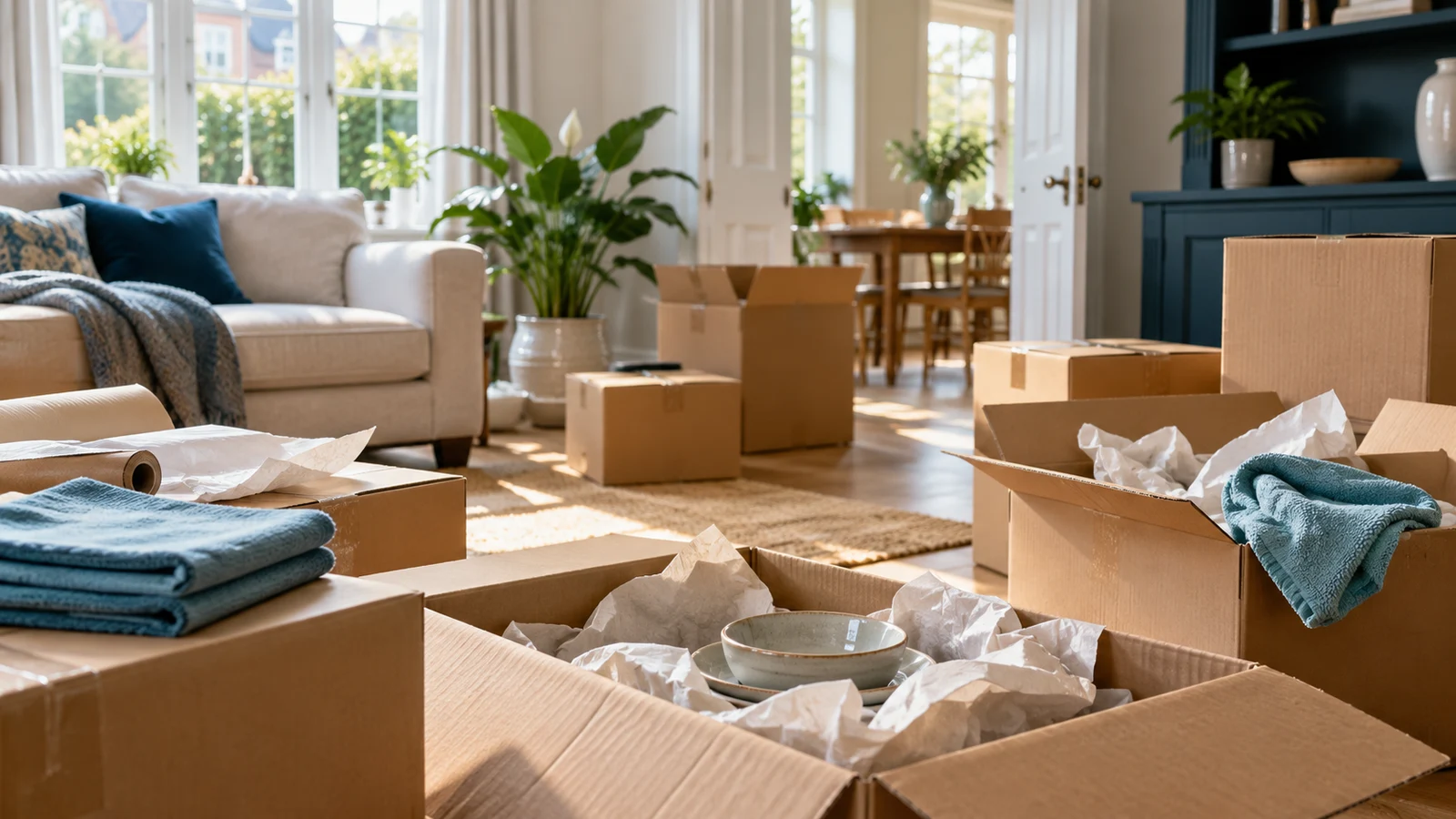
Confirm the delivery address for materials, who will receive them and any access restrictions. Check that there is somewhere dry and practical to keep boxes before use. Set up a clear packing area with scissors, tape, labels and a simple inventory, keeping walkways available as rooms fill. Keep an essentials bag outside the packing system with medication, chargers, paperwork and the items needed immediately after arrival. Ask for the quantities, materials, labour and charging terms in writing so you can distinguish an order from an estimate. Use our contact page to prepare an enquiry, or call 020 3404 5162 to discuss the packing work you need.
BEFORE YOU BOOK
Your questions, answered.
Clear arrangements start with the right questions. Call us if your move needs a closer look.
Can I order materials without booking packing assistance?
Explain that you want boxes and materials for packing yourself when you enquire. BestMove offers packing and boxes delivery, but the exact materials, quantities, delivery arrangements and price need confirmation. Ask whether the proposed items are appropriate for your contents rather than choosing solely by box size. Keep a record of what you have ordered and when you expect it.
How many boxes will I need for a flat?
There is no dependable quantity based only on the number of bedrooms. Kitchen cupboards, books, hobbies and storage spaces can change the total considerably. Walk through the property and make a contents list, then discuss materials against that list. Update the estimate as you sort belongings. Do not overfill boxes simply to make the original quantity last through the whole property.
Can the packing be done on moving day?
Discuss the amount of packing, the collection schedule and the property access before agreeing a date. Packing and loading compete for time and space if they are left to happen together without a plan. Ask the team to confirm when the packing work would take place and what must already be prepared. A transport booking alone does not settle that timing.
Should I leave drawers full?
Do not assume that is suitable. Tell the team what the furniture contains and ask how it should be prepared. Weight, construction and the access route all matter, and contents can move inside furniture during handling. Empty items unless another arrangement has been agreed. Keep loose shelves, fittings and delicate components identified, protected and associated with the correct piece.
What should I avoid putting in a moving box?
Keep keys, medication, important documents and immediate essentials with you. Ask about liquids, hazardous substances, perishables and unusual items before packing them for transport or storage. The team should know about anything requiring special preparation. A closed box should not conceal contents that affect whether the load can be accepted or handled under the agreed service.
LET’S DISCUSS THE DETAILS
Talk through your next move.
Have your postcodes, preferred date and item list ready. Call BestMove to discuss the service and the details that will shape your quote.