
MOVING ADVICE
Will it fit? Measure for a furniture delivery
Buying furniture is only part of getting it into the right room. A sofa can fit the lounge yet fail at a tight stair turn, while a flat-pack wardrobe may arrive in longer packages than expected. This guide explains what to measure before a London furniture delivery, what photographs help and how to describe access without making an unsupported promise that an item will fit.
Get the right item dimensions
Ask the seller for the dimensions of the furniture as delivered, including packaging and any separate components. A product page may describe the assembled piece without explaining how it travels. Measure the delivered form, not just the finished size shown beside a room photograph. Confirm whether legs, cushions or other parts are removable and whether the seller permits any disassembly before delivery.
Share the information when arranging furniture delivery. Include the number of packages and any weight details supplied, rather than guessing from the item’s appearance. For a second-hand purchase, ask for photographs of the actual piece and its current condition. Avoid relying on a seller’s statement that it ‘came through the door once’; a different route, new flooring or changed fittings can alter the available space.
Follow the complete route into the room
Walk from the likely legal loading position to the final location. Note gates, shared entrances, corridors, doorways and changes of level. Measure the whole route because the narrowest or most awkward point may be well away from the room itself. Record fixed obstacles such as handrails, radiators and boxed-in pipework rather than measuring only between the main walls.
For a delivery connected to a larger home move, send these notes with the inventory so the team sees the constraints together. Include the route at the collection address too. A large cabinet has to leave its current room before it can enter yours. Do not plan to remove doors, rails or building fittings without appropriate permission and a clear arrangement for who will do that work and make good afterwards.
Treat doors as openings with depth
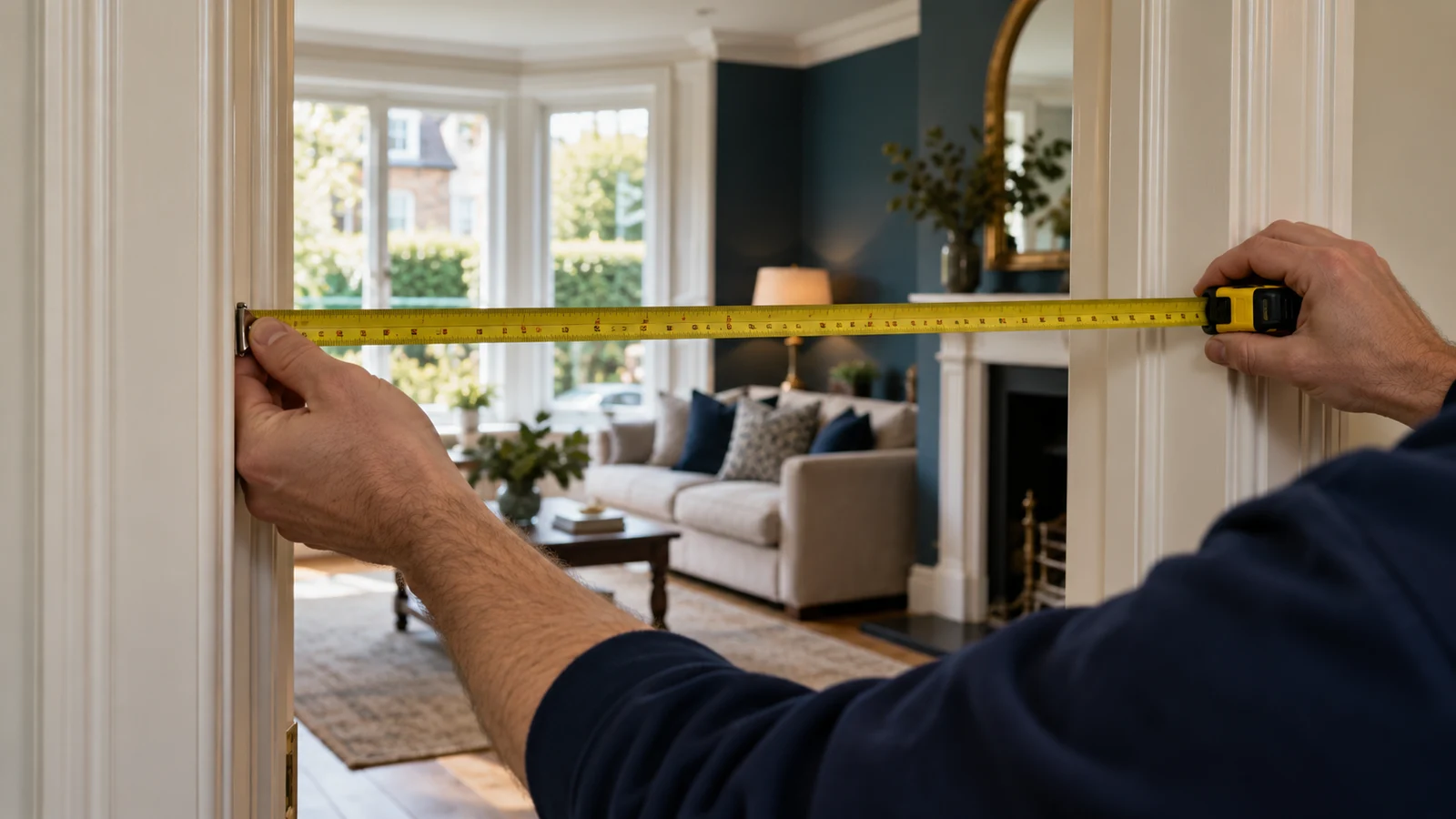
Record the clear opening with the door in its usable open position. Handles, closers and stops can reduce the practical space. Note the height, width and any threshold or step. Clear opening is the useful measurement, rather than the size of the door leaf or the outside of its frame. Show the surrounding space where a person carrying furniture must stand and turn.
If an item may require dismantling, discuss that with the furniture assembly team before transport is booked. Do not assume a large upholstered piece can be reduced without specialist work. Photographs can help identify questions but do not guarantee fit by themselves. Keep the measurements in a labelled sketch, identifying which opening belongs to which part of the route, so several similar entrance photographs cannot be confused during planning.
Pay special attention to stair turns
A staircase needs more than a width measurement. Describe its shape, landings, headroom and any turn at the top or bottom. Note where a sloping ceiling reduces clearance. The turning space matters because a long item can struggle around a corner even when its narrower side fits through the stair opening. Photograph the route from more than one useful angle while keeping exits unobstructed.
For a smaller load, ask which man and van arrangement suits the actual handling requirements. The number of items does not establish the staffing needed for an upper-floor delivery. Explain whether there is a lift alternative and any restrictions on its use. Do not test an awkward carry yourself to prove a point; provide measurements and let the relevant team assess what can reasonably be attempted with the item and route described.
Check lift rules and internal space
Measure the lift entrance and usable interior, then check the building’s own delivery arrangements. A lift may have a weight limit, booking process or restrictions on moving large objects. Confirm permission as well as dimensions. Ask the building manager about protection, keys and access times, and identify who will make the lift available when the delivery team arrives.
Give the same attention to workplace deliveries arranged alongside office removals. A goods lift may use a different entrance from the everyday passenger route. Record how the delivery reaches that entrance, including security procedures and any corridor turns. Avoid using a general building postcode as the only instruction for a site with several doors. A clear arrival point and a reachable contact are more helpful than a long note that leaves the correct entrance ambiguous.
Plan protection without shrinking the route
Protection needs room too. Wrapped furniture and temporary floor covering can change the way a route is used. Ask how delicate surfaces and vulnerable corners will be managed, and tell the team about any existing damage. Keep access clear and stable rather than covering everything with loose material that could create a trip hazard. Leave decisions about suitable protection to the people responsible for that work.
Discuss packaging and materials with packing support where relevant. Keep other boxes away from turning points and avoid placing a newly delivered piece in the only path to the next room. If the item will be assembled after delivery, reserve a suitable working area. Know who is responsible for packaging removal; a transport appointment does not automatically include taking every carton and protective sheet away.
Have an agreed answer if fit is uncertain
Where a measurement raises doubt, pause the booking decision and ask for assessment. Find out what happens if the item cannot be taken through the planned route. Agree the fallback before collection, particularly for marketplace purchases where the seller expects an immediate removal. Alternative storage, return transport or another delivery arrangement may need separate availability and charges.
If storage is being considered as a fallback, check that the item is suitable and that arrangements can actually be made. Do not assume it can simply remain in a vehicle while a room is changed. Confirm the seller’s return conditions separately from the transport booking. Keep authority clear: the person receiving the delivery should know what they can approve and when they need to contact you before instructions change.
Confirm placement before the carry begins
Mark the final room and position on your plan and check that the route is still as described. Move small obstacles and tell the team about changes such as building work or a lift outage. Finish the access conversation before unloading wherever practical. A quick review at arrival can reveal an important difference between the photographs and the conditions on the day.
Use your delivery contact to share final amendments. At completion, check the item, its components and any agreed assembly work before disposing of useful packaging or labels. Record any concern through the applicable process. Keep the measurements if you are still furnishing the property: they can help with the next purchase, provided you check the route again rather than treating an old sketch as a permanent guarantee for every item.
| Location | Record |
|---|---|
| Item | Delivered dimensions and package count |
| Doors | Clear opening and threshold |
| Stairs | Width, headroom, turns and landing |
| Lift | Entrance, interior and building rules |
Questions worth asking.
Which dimensions should I ask the furniture seller for?
Ask for the dimensions and number of packages as delivered, plus available weight information. Confirm whether the item travels assembled and which parts are designed to be removed. For used furniture, request photographs of the actual piece and note any damage or missing parts.
Is measuring the front door enough?
No. Check the full route at collection and delivery, including gates, corridors, stairs, lift entrances and the final room. Turning space and headroom can matter as much as width. Describe fixed obstacles and provide labelled photographs so the measurements can be understood together.
Can a delivery team remove a door if necessary?
Do not assume this is included or appropriate. Removing building fittings can require permission and specific work arrangements. Raise the possibility before booking and confirm who would do the work, whether it is suitable and how the fitting will be reinstated afterwards.
What if I am unsure the furniture will fit?
Send the item details, measurements and photographs for assessment before collection. Agree what would happen if the planned route cannot be used, including any return or storage arrangements. A photograph or product dimension alone should not be treated as a guarantee of access.
PUT YOUR PLAN INTO PRACTICE
Planning your own move?
Have your postcodes, preferred date and item list ready. Call BestMove to discuss the service and the details that will shape your quote.