
MOVING ADVICE
Furniture assembly around a tenancy change
Furniture work can sit awkwardly between the last night in one home and the first night in another. Beds are still needed, cleaning needs clear rooms and flat-pack fittings are easy to misplace. This guide helps you time dismantling and assembly around a tenancy change, with practical checks for access, manufacturer instructions, room layout and the belongings that must remain usable.
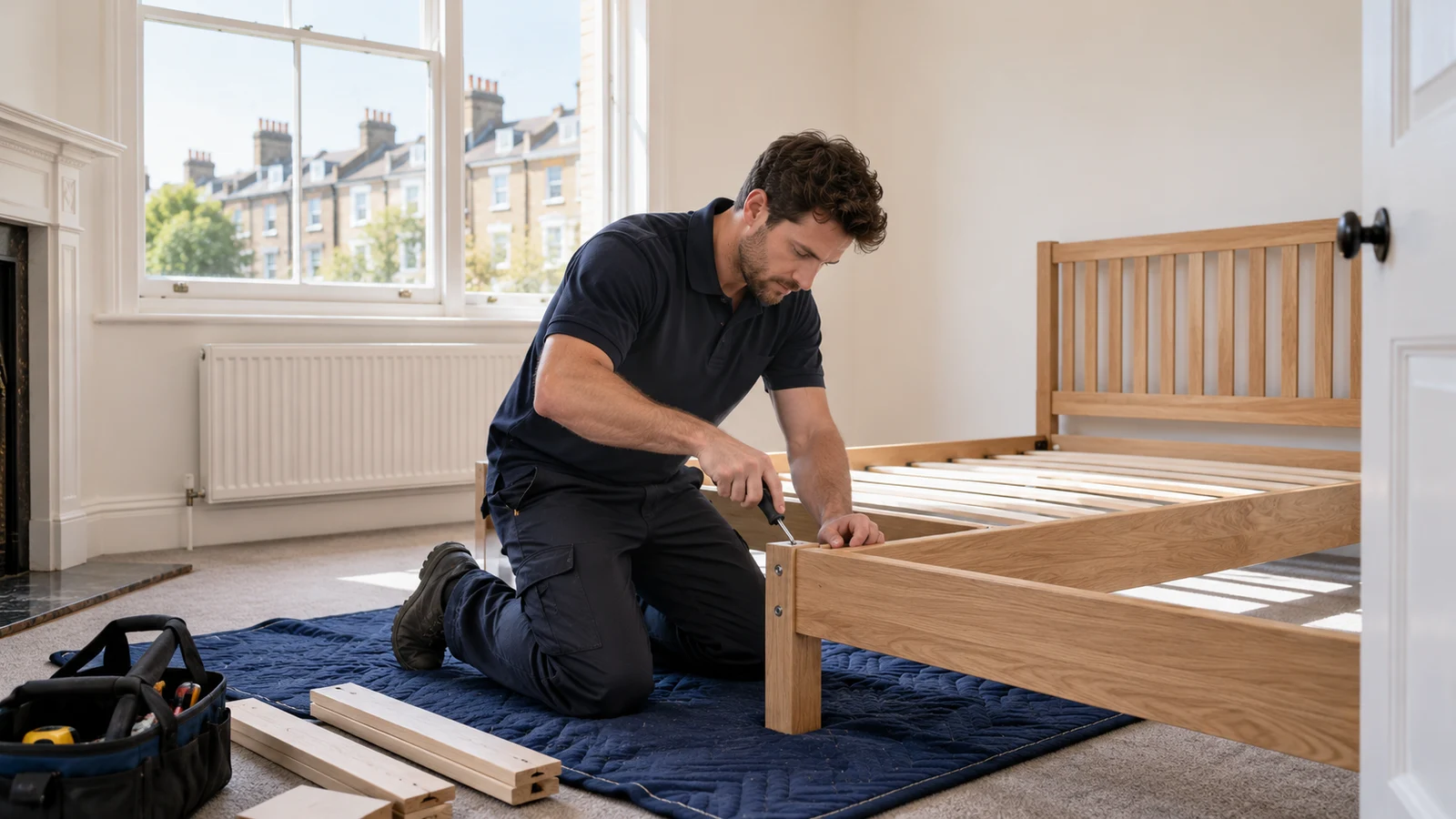
Identify the furniture that needs a decision
Walk through the property with a furniture list and mark each piece as travelling whole, possibly dismantled or staying behind. Measure the route as well as the item. Decide piece by piece; the fact that one wardrobe separates easily says little about a different unit with glued joints or an unfamiliar construction. Photograph the furniture and any instructions before asking somebody to assess the work.
Discuss the list with the team providing furniture assembly. Explain existing damage, missing fixings and any uncertainty about how a piece was originally built. Do not assume fitted furniture can be removed like a freestanding cabinet. Identify items belonging to the property separately and confirm what should remain with the relevant person. Clear ownership and scope matter before screws are removed or a unit is moved away from its original position.
Plan the last usable night
A bed may need to remain assembled until the morning of collection, while a spare desk can be dismantled earlier. Work around the household’s actual needs rather than treating every piece as equally urgent. Protect one usable sleeping setup for as long as it is needed. Think about children, caring responsibilities and anyone who needs a desk or chair for work during the final days.
Give these priorities to the people arranging your home removal. Agree which pieces are prepared before arrival and which form part of the booked work. Empty drawers and shelves as required, but keep essentials separately accessible. Avoid creating stacks of loose panels in the only walking route. If dismantling must happen in a bedroom, plan where the mattress, parts and personal bags will wait while the room becomes a working area.
Use instructions instead of memory
Find the manufacturer’s assembly instructions for each relevant item. Photograph model labels or product references where available, and check that the instructions match the actual version. Keep a reliable reference with the parts, particularly for pieces with similar-looking fixings in different positions. A vague recollection of how the furniture went together is less useful when several units have been dismantled at once.
Record unusual details for the furniture delivery plan, including parts that should stay upright or surfaces requiring careful protection. Do not attempt a repair or alteration merely to make a unit easier to move. If a piece seems unstable, stop and discuss a suitable approach. Follow relevant manufacturer guidance and arrange qualified help for work involving building fixings or services where necessary; a general assembly appointment should not be assumed to cover every kind of installation.
Make the fixing system easy to follow
Give each furniture item a short code and put its fittings in a separate labelled container. Record whether that container travels with the furniture or with you. Never mix several fixing sets just because the screws look alike. Photograph connection points before separation and label panels discreetly where a suitable removable method can be used without marking the finish.
Ask about suitable protective materials through packing and boxes delivery. Protect exposed edges and keep small components from becoming loose in the vehicle. Do not place heavy panels where they can fall or block exits while awaiting collection. Keep instructions and parts together in your inventory even if they travel separately. At the destination, the person assembling the furniture should be able to identify the correct fittings without opening every household box.
Give cleaning a clear room boundary
Once furniture is removed or dismantled, previously covered surfaces may become accessible. Explain to the cleaning team which rooms will be clear and what furniture will remain. Separate cleaning from furniture handling so neither provider is expected to do unagreed work. A panel stack beside a wall can still block the area even when the original wardrobe is no longer standing there.
Coordinate end of tenancy cleaning with the expected end of furniture work and collection. Ask what access is needed around appliances, cupboards and remaining items. Avoid rebuilding or moving dusty furniture through a finished room without considering the effect. Keep responsibility for the final property check explicit. The goal is a workable sequence, with furniture work and cleaning each given the conditions agreed for their own tasks.
Check the destination room before assembly
Measure the new room and decide where the furniture should stand before parts are unpacked. Consider doors, sockets, radiators and the space required to use drawers or open wardrobe doors. Position before rebuilding wherever practical, since moving a completed heavy unit again can introduce unnecessary handling. Use the real dimensions of the furniture rather than a product photograph that makes its scale difficult to judge.
If some pieces are coming out of storage, send the updated room plan before redelivery. Confirm whether everything needed for a bed or desk will arrive together. Check any manufacturer requirements for safe use and appropriate restraint, and agree who will address them. Do not use furniture simply because it looks complete if essential fittings are missing or a stability issue remains unresolved. Raise the problem while the relevant parts and instructions are still easy to identify.
Keep small separate jobs properly scoped
A single purchase or one dismantled item can need its own collection and assembly plan. Describe the full job, including the number of packages, the weight information available and the route into the room. Small does not always mean simple; a tall unit on an upper floor can require more planning than several easy-to-handle boxes. Tell the provider about stairs and awkward turns before the appointment is confirmed.
Ask the man and van team what handling and staffing suit the load, rather than assuming a driver-only booking includes every lifting task. Establish whether assembly is a separate service and when it will happen. Keep packaging until the item has been checked against its instructions, then use an appropriate disposal route. Do not let an apparently minor extra purchase silently expand the scope of an existing household moving booking.
Close the job with a practical check
Check the furniture against the agreed work: parts present, doors and drawers working as intended and any outstanding safety requirement clearly identified. Record unfinished work explicitly instead of treating it as a detail that will somehow be resolved after the team has left. Keep photographs and the parts list if there is a missing component or an issue requiring the manufacturer or seller’s attention.
Use your BestMove contact to resolve questions about the booked scope. Keep the property handover separate from furniture completion at the new address; both may need different records and responsible people. Once everything is ready for use, store the instructions and spare fittings in a labelled place. A few minutes spent keeping the final record tidy can save a much longer search when a bed needs adjustment or the furniture is moved again.
| Moment | Decision |
|---|---|
| Before collection | Which pieces remain usable overnight? |
| During preparation | Where do panels and fixings wait? |
| Before cleaning | Which rooms are genuinely clear? |
| At destination | Position, assembly and safe-use checks |
Questions worth asking.
Can all flat-pack furniture be dismantled for a move?
No assumption should be made from the label alone. Construction, condition, previous repairs and the available instructions matter. Show photographs and discuss each item before booking. Some furniture may be better moved whole where access permits; fitted or unstable units need particular assessment.
When should I dismantle the bed?
Plan around the final night you need it and the work agreed for moving day. Keep bedding, essential belongings and the mattress route organised. Confirm who will dismantle and reassemble the frame, and make sure its fixings and instructions remain easy to locate.
Should furniture assembly happen before cleaning?
At the old address, agree when furniture and parts will be out of the cleaning areas. At the new address, consider the room layout and any cleaning needed before large units are positioned. Coordinate appointments directly rather than assuming either team can work around any obstruction.
What if fittings are missing at the new home?
Stop using the affected furniture until its condition and requirements have been checked. Record what is missing, consult the correct manufacturer instructions and contact the relevant provider or seller. Avoid substituting random screws or assuming a similar-looking component is suitable for the load.
PUT YOUR PLAN INTO PRACTICE
Planning your own move?
Have your postcodes, preferred date and item list ready. Call BestMove to discuss the service and the details that will shape your quote.