
MOVING ADVICE
Pack fragile belongings with a clear box plan
Fragile packing works best when the container, protection and handling information are planned together. Writing a warning on a box cannot compensate for loose contents or weak packaging. This guide explains how to organise household fragile items before a London move, decide what needs specialist assessment and make the unpacking process easier. It covers practical preparation without claiming one method suits every material or valuable object.
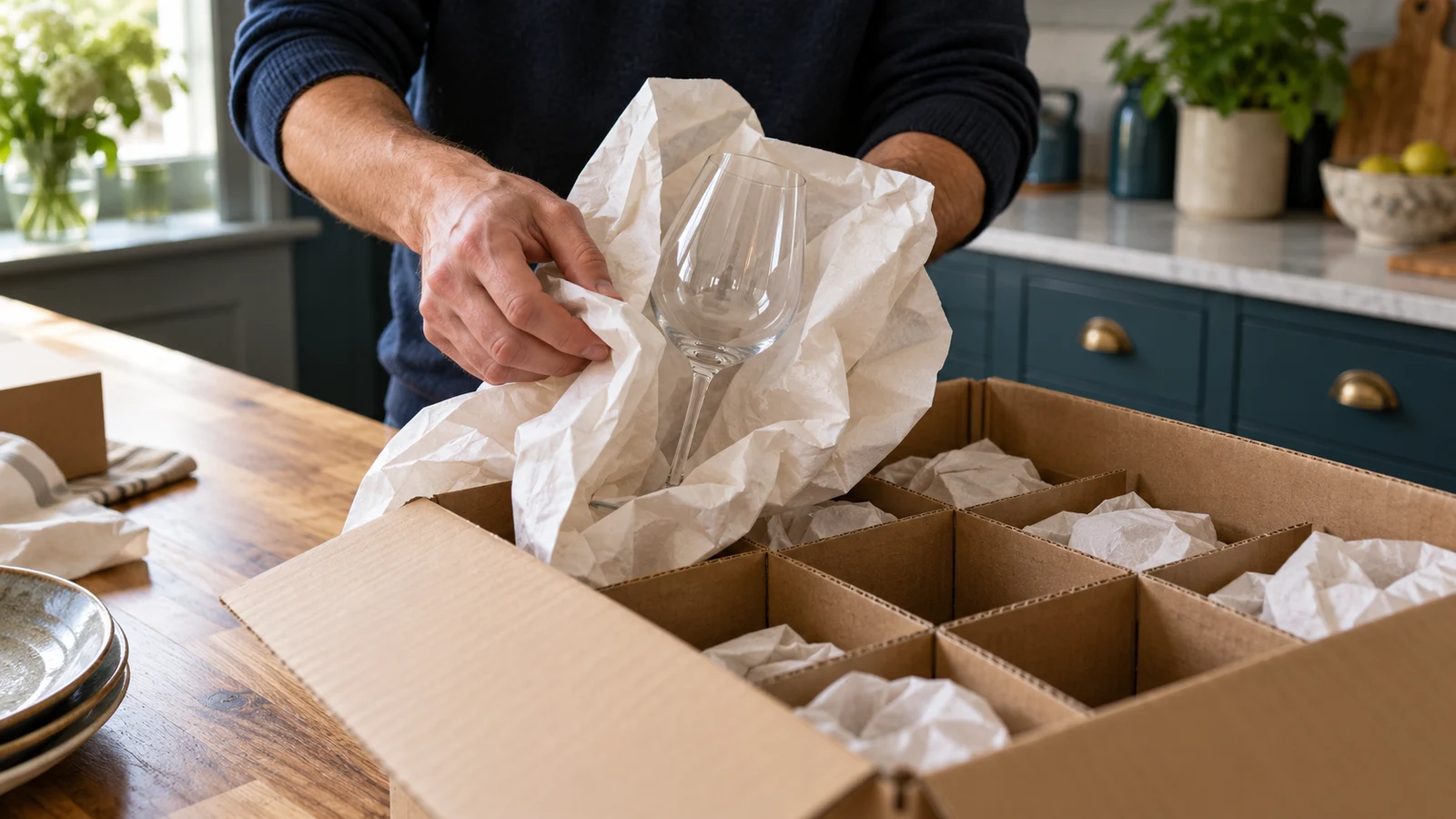
Sort fragile belongings by their needs
Start with an inventory of breakable or delicate items rather than an unsorted pile on the dining table. Group ordinary kitchenware separately from artworks, unusually shaped pieces and anything with a particularly vulnerable finish. Assess the item before choosing a box. The purpose is to identify different needs early, not to assume everything marked fragile can travel together under the same protection.
Tell the team arranging your home removal about items that may require assessment. Provide clear photographs and available dimensions, and explain any existing cracks, loose parts or repairs. For valuable, historic or specialist objects, seek appropriate handling advice rather than relying on a general household guide. Keep the inventory practical, with item references that connect to photographs and the boxes in which ordinary belongings will eventually travel.
Choose sound containers for the contents
Select containers suited to the weight, shape and vulnerability of what they will carry. Check the condition of reused cartons and follow any relevant packaging instructions. The box is part of the protection, not merely a place to collect loose objects. Avoid overloaded or damaged containers and do not assume a large box is the easiest answer for a collection of heavy kitchen items.
Ask about appropriate supplies through packing and boxes delivery. Explain the type of contents instead of requesting an arbitrary number of cartons. Keep packing material clean and suitable for the surfaces it contacts; some finishes need specific advice. Prepare a clear work area with enough space to close and label a completed box. When a container is ready, move it to a stable place where it will not be repeatedly opened or knocked.
Prevent direct contact and movement
Plan how each ordinary fragile item will be supported so hard surfaces do not collide during handling. Protect individual pieces appropriately and consider the empty spaces inside the container. Control movement within the box, while avoiding pressure that could damage delicate edges or attachments. A tightly forced lid can indicate the contents need a different arrangement rather than another strip of tape.
Where unfamiliar furniture parts or decorative fittings are involved, speak to the assembly team before removing them. Record what belongs to each piece and keep fixings identified. Do not wrap an entire loose group and assume the pieces inside are protected from each other. If you are unsure about an item, leave the packing decision open for appropriate advice instead of hiding the uncertainty beneath several layers of material.
Keep sets organised without overfilling
It is useful to keep a set traceable, but it does not have to fit into one heavy carton. Split a large collection across manageable boxes and use a shared reference such as ‘dining set A’. Keep the record together even when the contents travel separately. Write a short list of what each box contains so a missing piece can be located without unpacking the whole kitchen.
For items being purchased or collected separately, include the same information in the delivery instructions. Confirm whether the seller supplies suitable packaging and who is responsible for any extra preparation. Keep original packaging where it remains sound and appropriate, but do not assume a product carton guarantees safe transport after it has been damaged or altered. Check the actual condition and raise doubts before the collection is underway.
Label for placement and useful handling
Add the destination room, a box reference and a concise description. Use a fragile indication where it helps communicate the contents, while recognising that labels do not replace suitable packing. Make information visible and consistent across the load. Keep sensitive or valuable contents out of detailed public-facing labels where that would create an unnecessary disclosure; retain the fuller inventory privately.
Discuss the actual load when asking about man and van transport. A small quantity of fragile boxes still needs an appropriate handling plan. Explain any orientation requirements supported by the item or packaging instructions and ask how they will be accommodated. Avoid giving contradictory labels, such as arrows in different directions on separate sides of the same container. A person receiving the box should understand its intended placement without needing the original packer beside them.
Separate first-use belongings from fragile stock
Keep the kitchen items needed immediately at the new home in a clearly identified small group. The rest can be unpacked gradually once surfaces and cupboards are ready. Plan the first evening separately so nobody searches through protected glassware for a mug while furniture is still being carried into the room. Include basic personal essentials in their own bag rather than adding them to whichever fragile box remains open.
If some boxes will enter storage, record which ones and check the provider’s acceptance and packing requirements. Keep belongings likely to be needed during the storage period outside that load unless retrieval arrangements have been confirmed. Label the inventory with the storage destination, not just the eventual room. This prevents an essential carton being collected with long-term furniture because its bedroom label looked like every other box.
Leave safe working space at collection
Place completed boxes where the team can assess and handle them without climbing over loose materials. Keep exits and stairs clear, and avoid tall unstable stacks. Good packing includes the waiting area; a carefully prepared carton can still be damaged if it is balanced near a doorway while the last room is cleared. Keep children and pets away from the active packing and carrying route.
If cleaning follows collection, explain which boxes and materials will remain until your final exit. Dispose of unsuitable waste through an appropriate route and do not mix packing leftovers with clean stored belongings. Tell the movers about any carton that has been reopened or repacked since the inventory was shared. A changed box may need its label or contents record updated before it is loaded.
Unpack deliberately and record concerns
At the destination, choose a stable surface and unpack one container at a time. Check the contents before discarding protective material, particularly where small parts could remain hidden. Close the loop against the inventory by marking complete boxes and noting any issue clearly. Keep original photographs and relevant packaging if the applicable reporting process requires them.
Use your moving contact for questions about the booked work and any concern identified after delivery. Follow the provider’s stated process rather than assuming an informal message to somebody on the day is sufficient. Store usable materials neatly if you intend to keep them. Once unpacking is complete, retain an inventory of particularly delicate belongings and the preparation that worked, while seeking fresh advice if their condition or the next journey changes.
| Element | Purpose |
|---|---|
| Container | Suitable sound packaging |
| Internal protection | Separate contents and limit movement |
| Reference | Connect box to private inventory |
| Destination | Help place it for controlled unpacking |
Questions worth asking.
Is a fragile label enough to protect a box?
No. The container, internal support and condition of the packaging matter. Use labels to communicate destination and relevant handling information, but do not rely on them to prevent loose items from touching or moving. Ask for appropriate advice where the contents need particular treatment.
Should every item in a dinner set go in one carton?
Keep the set traceable, but divide it into manageable, suitably packed boxes where appropriate. Use a shared reference and a contents list for each carton. Avoid making one container difficult to handle simply to keep the entire collection physically together.
Can I use old product packaging?
Check whether it remains sound, complete and appropriate for the actual item and journey. Packaging that is damaged, altered or missing its internal support may not serve the same purpose as it did when new. Raise uncertainty before collection rather than relying on the original logo or shape.
What should I do with specialist fragile objects?
Provide photographs, dimensions and information about condition, materials and existing repairs. Seek suitable specialist handling advice before packing. General household techniques do not cover every artwork, antique, instrument or unusual object, and acceptance and preparation should be confirmed individually.
PUT YOUR PLAN INTO PRACTICE
Planning your own move?
Have your postcodes, preferred date and item list ready. Call BestMove to discuss the service and the details that will shape your quote.